Sunday, 20 May 2012
What have you learned about youeself during this course?
Hillfield Strathallen’s World Issues course has not only encouraged me to become more informed and knowledgeable about pressing current events in my backyard and around the globe, but has given me the opportunity to share my thoughts and present my opinions within a friendly classroom environment. The World Issues program has taught me to develop my critical thinking skills, formulating opinions, honing my debating skills, present my ideas in an inspiring, constructive, enthusiastic manner, and learning the importance of being informed about global issues. Because of this program I have learned where I stand with many of Canada’s and the World’s issues that we have studied, discussed, and debated in class, and I now feel as though I have learned a great deal about myself. In the future I will continue to practice these valuable skills, and will cherish the opinions I have formulated especially when making important choices that will hopefully insight positive change not only in myself, but the world around me.

As you move into the next phase in your life, how will you try to affect change in the world regarding these issues?
As I enter University
and move into the next phase of my life there are a number of ways I plan to
incite change in the world regarding the issue we have discussed in class. Firstly,
I plan to create awareness through working with university clubs and projects.
In addition, I will make environmentally friendly changes to my lifestyle, such
as shorter showers, turning off lights, and using recycled and renewable
products. Lastly, I will continue to be a devote member to the Free the
Children’s organization. As I have mentioned early in my blog I traveled to
Kenya during the summer of 2011 with a group of youth to build a school. In the
future I hope to do another similar trip to Ecuador known as the clean water
project. This will offer residents accessible clean and safe drinking water.
What is the biggest threat facing Canada in the next 50 years?
There are many potential threats facing Canada in the next 50 years. However, the threat I find most concerning is climate change. With the enormous amount of evidence that has been proved through scientific studies and observations there is no doubt that climate change is happening. Evidence that climate change is occurring can be observed through a variety of physical evidence. The climate can be seen through changes such as the melting of the polar ice caps, atmospheric carbon dioxide levels, the hole in the ozone layer, rising temperatures, and rising sea levels. The Earth’s climate has changed throughout history, however, in the last few years the atmospheric CO2 has shown a drastic change. The level of carbon dioxide has never been this high in the past 650, 000 years.
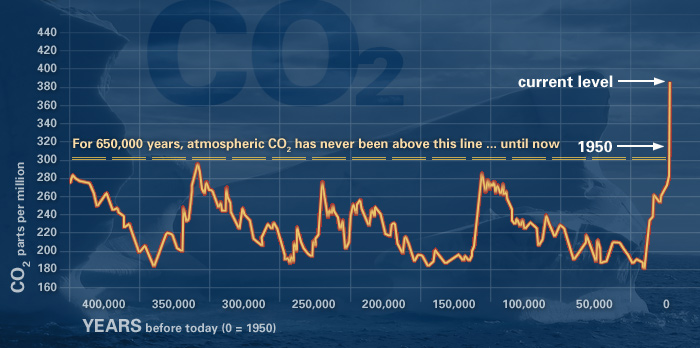
In many cases across Canada, we have made progress in our understanding of how human activities affect the environment. Since the 1970’s environmental awareness, conservations, protection, and sustainability have become increasingly important elements in economic decision making. Many countries that produce and green house gases are trying to balance environmental and economic requirements. Politicians must make difficult decisions regarding how to spend environmental dollars. There are many environmental issues to address and it is difficult to choose just one single issue to focus on. However, since ecosystems and life is all interconnected in the environment when you fix one problem you may be solving others.
What are the three most important issues you have learned about during this course?
- Arab Israeli Conflict
- Legalizing Marijuana
- Nuclear Power as a Source of Alternative Energy
De-criminalizing Marijuana
1. What
do you think the affects of legalizing and de-criminalizing marijuana use would
be? Should this be enforced?
In my opinion, the
Canadian government should decriminalize marijuana for a number of reasons.
Firstly, by decimalizing marijuana it will drastically reduce organized crime. In
many ways it is no different than tobacco and alcohol. In fact, marijuana may not
be as bad as drinking alcohol as long as it use used in moderation, and people
are educated about the risks and consequences. Prohibition was an expensive
failed policy that has proven not to significantly reduce use. All the money
they use from the fine can go towards governmental programs. The poll,
conducted by Toronto-based Forum Research Inc., showed that residents of
British Columbia were the most likely to support marijuana laws reform, with
73% of respondents indicating laws should be changed. Quebec had the lowest
support for reforms, though the majority of respondents, 61%, supported
changing marijuana legislation. 
Abortion
1. How do you feel about abortion, what are your views on it, and how should the legal system get involved?
Abortion is possibly one of the most controversial topics facing Western society today. Personally, I do not think abortion should be used as a form of contraception, however; I am a strong believer in Pro choice and it is no place for the government to intervene in personal decisions. If the Canadian government chooses to criminalize abortion, it will have many negative repercussions regarding the pregnant woman. Take away her reproductive choice and you step onto a slippery slope. Firstly, the ability of a woman to have control of her body is critical to civil rights. Therefore, if the government can force a woman to continue a pregnancy, why not force a woman to use contraception or undergo sterilization if it suits the government agenda? In addition, teenagers who become mothers have grim prospects for the future. They are much more likely to drop out of school, the child may receive inadequate prenatal care, the teen mother will likely rely on public assistance to raise a child, and they are more likely to develop health problems, or end up divorced. Statistics show that very few women who give birth choose to give up their babies for adoption - less than 3% of unmarried women, including teens. Furthermore, abortion is a safe medical procedure. The vast majority of women, 88%, who have an abortion, do so in their first trimester. Medical abortions have less than 0.5% risk of serious complications and are extremely unlikely to affect a woman's health or future ability to become pregnant or give birth. In the case of rape, forcing a woman made pregnant by a violent act would cause drastic psychological harm to the victim. In addition to this, forcing the woman into having her sadistic, narcissist, rapist’s child would not only cause more extensive physiological harm, but is just plain wrong. Lastly, by criminalizing abortion many women may become so distressed and desperate they will resort to self abortions. As a result this could lead to a serious injury, maiming, or bleeding to death of a woman. Your body should not be a battleground. Abortion is a personal descion and not a legal debate.

Saturday, 19 May 2012
Bill C-30
Do you agree that the Canadian Government should be allowed to
"spy" on Canadians if it means stopping child pornography offenders?
Where should the government draw the line?
Bill C-30, a proposed
legislation known as the “Protecting
Children from Internet Predators Act”, would give Canadian police
and intelligence agencies the authority to access Canadians’ electronic
communications and telocomunications without a warrant. The bill was a proposed
amendment to the Criminal Code of Canada introduced by the Conservative
government of Stephen Harper on February 14, 2012. Although society is
desperate to stop child pornography offenders, many Canadians viewed the Bill
with fear and contempt. While Canadians already anguish over Facebook
and Google’s increasingly blatant use and storage of our online lives, we’re
blind to the ultimate destination of this information. It can now go straight
to the cop who asks for it. It gives the police a licence for fishing
expeditions into all “private communications,” the all-inclusive term used in
the bill. Cellphones would become an electronic prisoner’s bracelet. When I
first heard of this bill I was in full support of this. Why worry when you have
nothing to hide? However, when I began to do more research into the topic I
have become more nervous about allowing strangers to have access and “spy” on
all my private communications. It is difficult to say where the government should
draw the line, but in my opinion police should have a warrant before they invade
your personal life. A bill similar to this needs to be passed, however; Bill
C-30 also needs slight modifications in order to protect the “personal life” of
Canadians.
Subscribe to:
Posts (Atom)