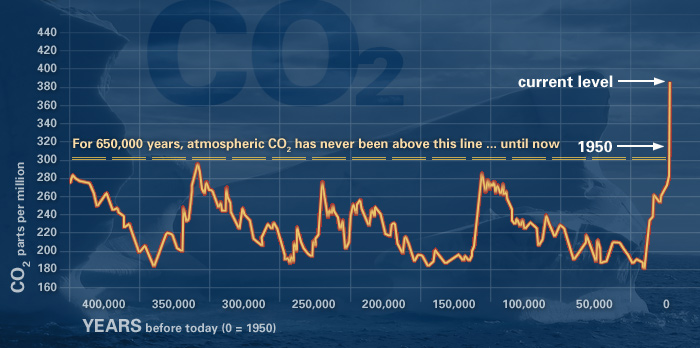
There are many potential threats facing Canada in the next 50 years. However, the threat I find most concerning is climate change. With the enormous amount of evidence that has been proved through scientific studies and observations there is no doubt that climate change is happening. Evidence that climate change is occurring can be observed through a variety of physical evidence. The climate can be seen through changes such as the melting of the polar ice caps, atmospheric carbon dioxide levels, the hole in the ozone layer, rising temperatures, and rising sea levels. The Earth’s climate has changed throughout history, however, in the last few years the atmospheric CO2 has shown a drastic change. The level of carbon dioxide has never been this high in the past 650, 000 years.
In many cases across Canada, we have made progress in our understanding of how human activities affect the environment. Since the 1970’s environmental awareness, conservations, protection, and sustainability have become increasingly important elements in economic decision making. Many countries that produce and green house gases are trying to balance environmental and economic requirements. Politicians must make difficult decisions regarding how to spend environmental dollars. There are many environmental issues to address and it is difficult to choose just one single issue to focus on. However, since ecosystems and life is all interconnected in the environment when you fix one problem you may be solving others.

No comments:
Post a Comment